Is the placement suitable?
A piercer should examine the area, explain angle and tissue needs, and offer an honest alternative when a placement is not a good fit.
Piercings
A good piercing plan considers jewelry quality, placement, pressure, sleep, work, sport, follow-up, and the full healing commitment.
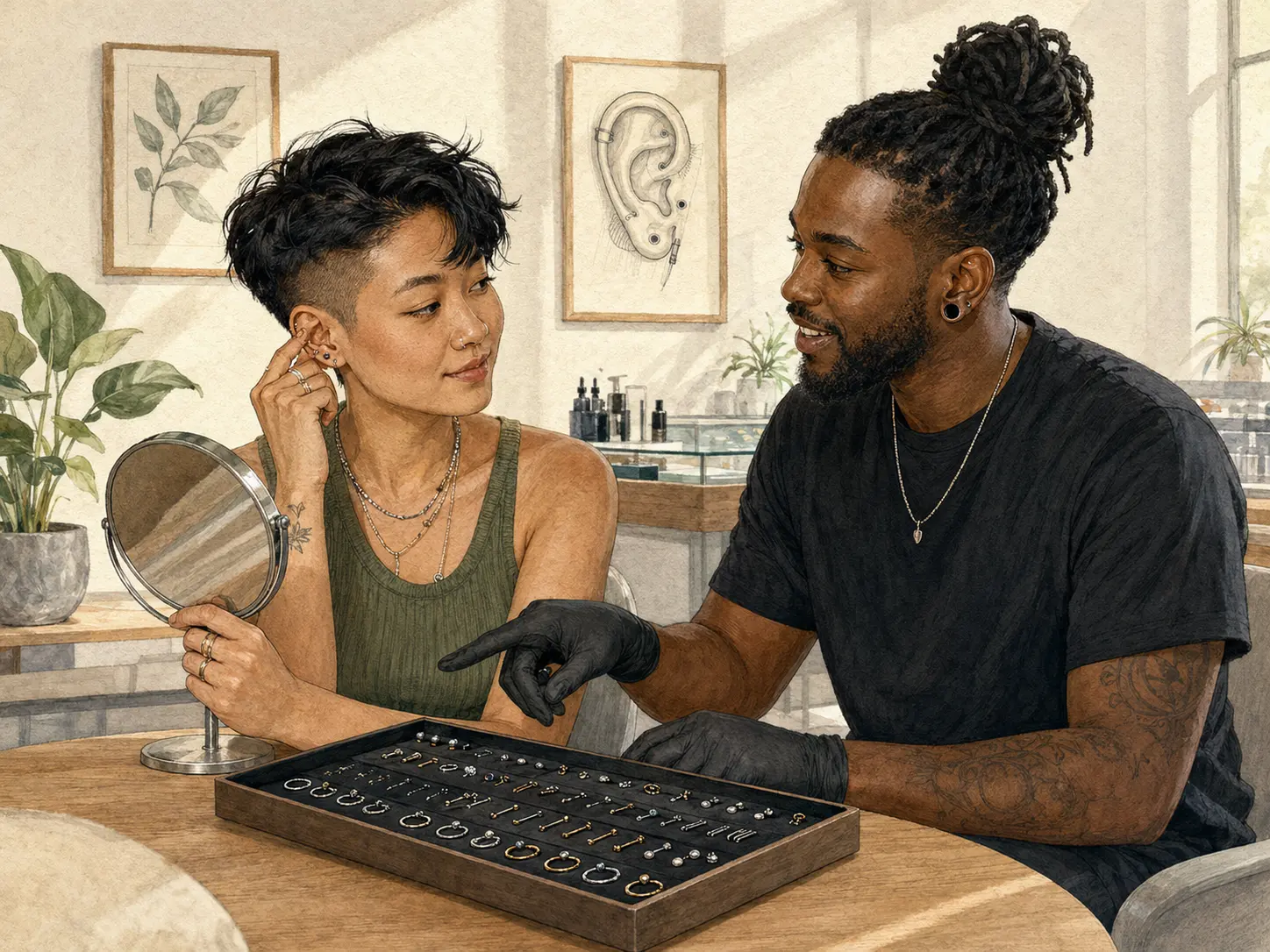
Your inspiration matters. Anatomy and safe fit decide what is workable.
A piercer should examine the area, explain angle and tissue needs, and offer an honest alternative when a placement is not a good fit.
Ask for the exact material, style, finish, size, and whether a professional downsize will be expected.
Look for sterile single-use needles, packaged instruments, an autoclave, spore testing, sharps disposal, and written aftercare. No piercing guns.
Plan the appointment, care for the result, and know when to ask a piercer or clinician for help.
How to compare placements, jewelry, studios, and healing commitments before an appointment.
Read the guideA safety-first guide to monitoring tattoos and piercings without panic or false reassurance.
Read the guideChoose timing that protects healing without putting the rest of your life on hold.
Read the guideUnderstand standards, finish, threading, dimensions, anatomy, and why healing jewelry is not a fashion guess.
Read the guideA respectful guide to terminology, privacy, anatomy, consent, professional fit, healing logistics, and controlled visual education.
Read the guide